Original by Liu Yang | Black Eagle PV
The commercial advancement of a technology is reshaping the competitive landscape of the photovoltaic industry.
BC technology, once regarded as a "niche route" just two to three years ago, is now rapidly growing into one of the mainstream technical routes.
As a rising star with latecomer advantages, BC technology’s commercial prospects and positive impact on the industry have become increasingly clear amid competition with HJT and TOPCon.
Over the past year, why has BC accelerated its progress? How does BC’s differentiated advantage manifest in the new era of value competition? As the industry enters the "era of scenarios", how can BC conquer the utility-scale market? How will downstream customers evaluate BC
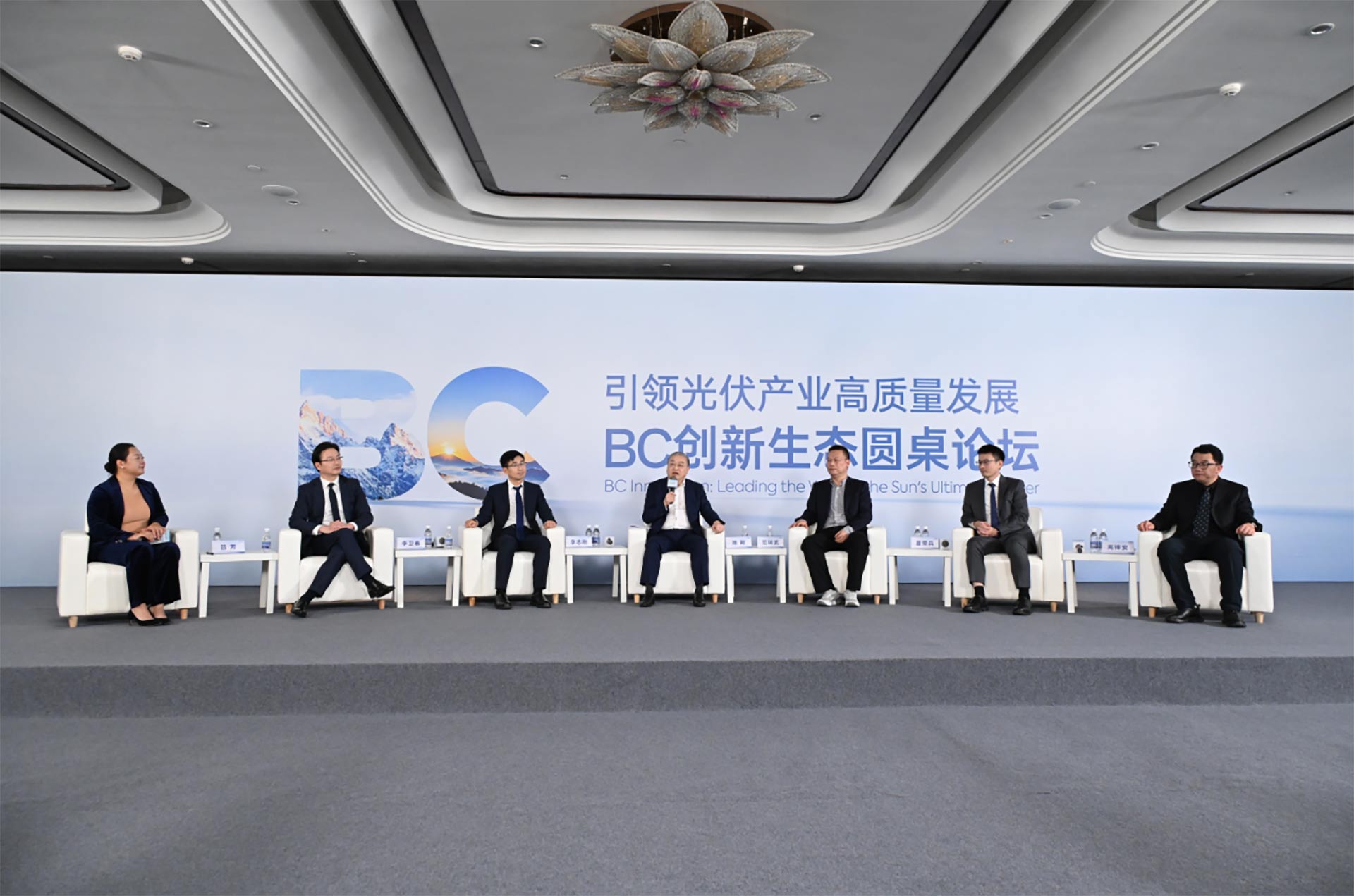
In recently, the Global BC Technology Innovation Summit & 14th bifi PV Workshop was held in Yiwu, Zhejiang, gathering more than 600 industry professionals. On the first day, Aiko Solar, Laplace, Rainbow New Energy, Dier Laser, Skyworth PV, and TÜV Rheinland gathered in the BC Innovation Ecology Roundtable, reviewing and deeply discussing BC’s commercialization path, opportunities, and future trends.
Ecological Revolution: A Co-creation and Sharing Innovation Ecosystem Has Taken Shape!
BC technology is hailed as the crown of crystalline silicon solar cells, not only for its high efficiency but also for the extreme difficulty of low-cost mass production. As a "rising star", BC must accelerate the construction of its own ecosystem to break through.
After thousands of trials and hardships, we may finally strike the gold! This process cannot be achieved by a single company alone; it requires sincere collaboration and joint research by upstream and downstream partners in materials, equipment, cells, modules, and other sectors.
In the memory of Li Zhigang, Chairman of Dier Laser, around 2020, when Chen Gang, Chairman of Aiko, proposed using laser technology instead of traditional photolithography to produce BC cells, the team was initially uncertain. "In the past, BC equipment used photolithography; there was no precedent for laser equipment." The "from 0 to 1" journey is ultimately a game for the brave. To facilitate communication, collaboration, and breakthroughs, Dier Laser directly moved its R&D center to Aiko’s production workshop. The two teams worked three shifts to troubleshoot problems and finally conquered the nano-scale thin-film etching challenge. This enabled stable mass production of ABC modules and also earned Dier Laser a "ticket" to the global high-end PV equipment market.

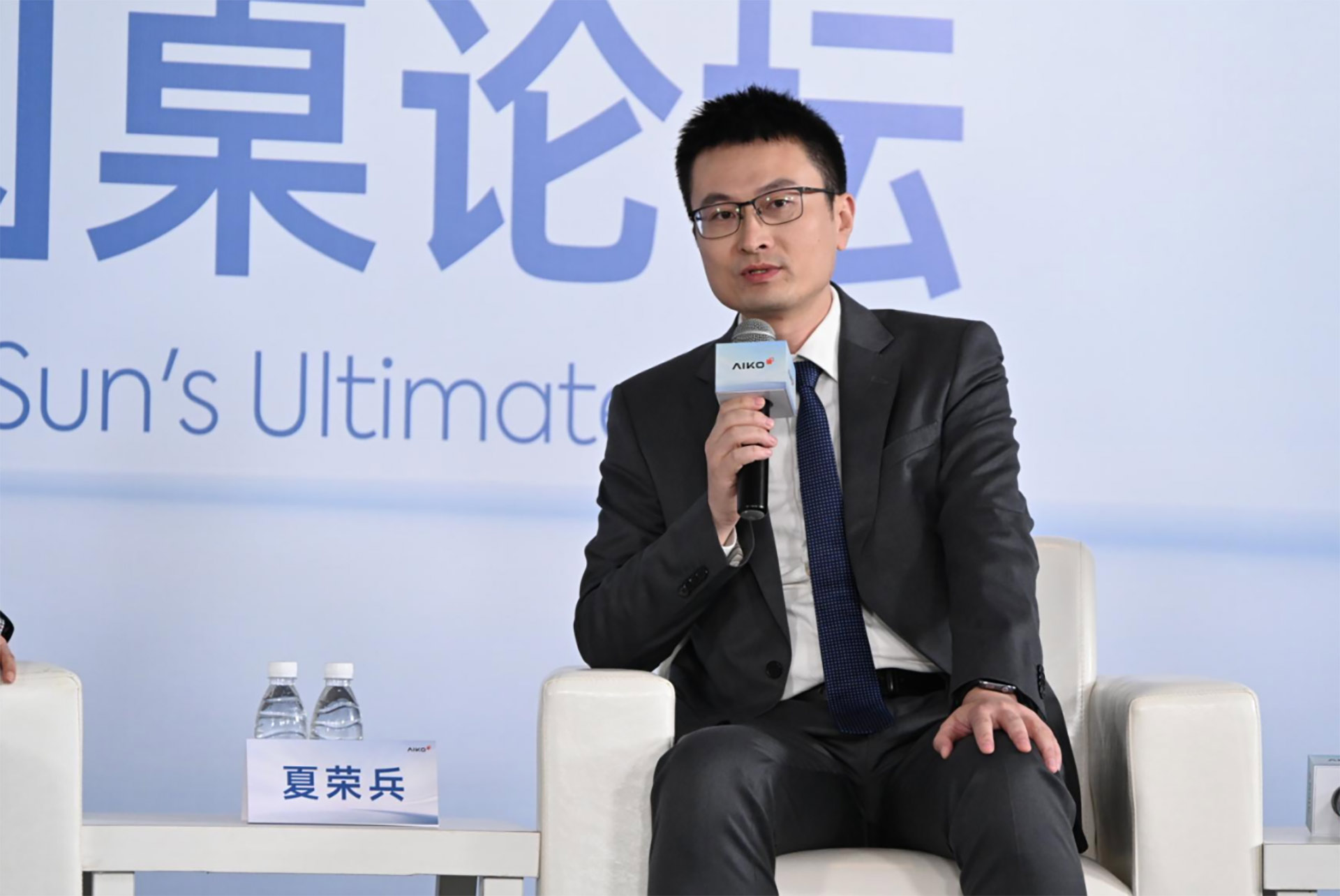
Xia Rongbing, Vice President of Laplace, noted that BC processes require far higher precision in coating uniformity and thermal field control than traditional technologies. "People always say it’s hard to improve from 90 to 98 points, but due to BC’s strict process requirements, 95 points may be the passing line for BC technology." To this end, the team reconstructed production logic and conducted high-intensity collaborative debugging even during the Spring Festival. Eventually, the challenges were overcome; BC equipment performance surged, driving technological upgrading across the entire PV equipment industry.
Gao Feng’an, Executive Director and General Manager of Rainbow New Energy, pointed out: "In the BC ecosystem, our competition is not by price fighting each other for orders, but jointly raising technical thresholds and establishing quality standards. Aiko made us deeply realize that PV glass is not just a protective material covering the module surface, but a core component affecting module power generation efficiency and long-term reliability. This cognitive upgrade allowed Rainbow New Energy to maintain stable profits during industry adjustments, with gross margins of high-end products 5–8 percentage points higher than the industry average."
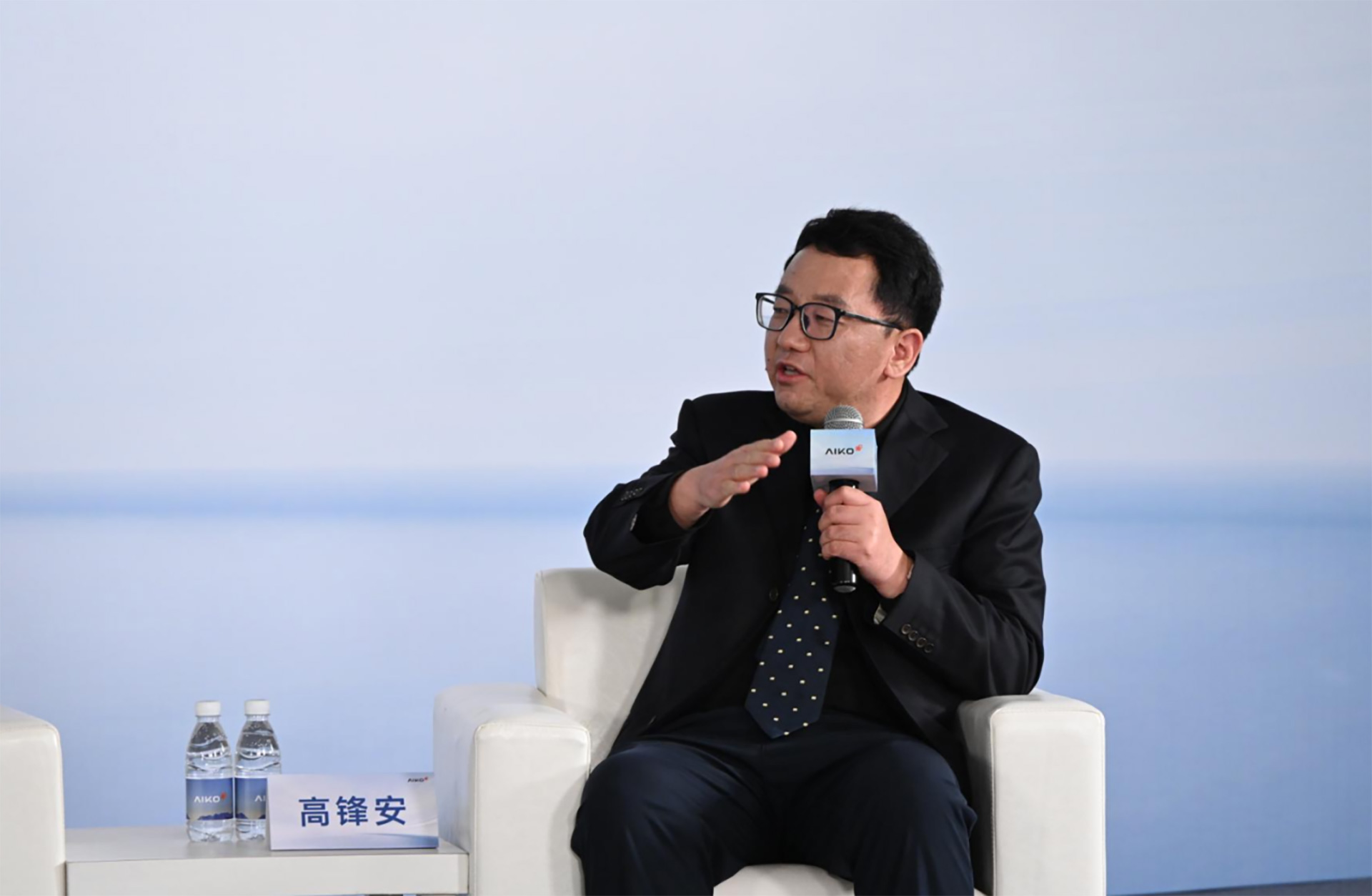
What kind of ecosystem do we really need? Fan Ruiwu, Chairman of Skyworth PV, emphasized: "Previously, the relationship between PV manufacturers and end customers was a simple, direct buy-sell relationship, which is inherently a game. However, if upstream and downstream build an ecosystem, partners can jointly create greater value."
As BC’s technological value is continuously verified, it has shifted from an option to a necessity, and BC’s "circle of friends" is rapidly expanding. As of 2025, a collaborative innovation system involving the entire BC industry chain—technology, manufacturing, channels, brands, and terminal applications—has taken shape, with joint participation, value co-creation, and future sharing.As BC’s technological value is continuously verified, it has shifted from an option to a necessity, and BC’s "circle of friends" is rapidly expanding. As of 2025, a collaborative innovation system involving the entire BC industry chain—technology, manufacturing, channels, brands, and terminal applications—has taken shape, with joint participation, value co-creation, and future sharing.
Looking back, the BC ecosystem can be summarized by four characteristics:
1. Concerted efforts, joint investment, risk sharing, and benefit sharing.
2. Discovering and unlocking value together through technological breakthroughs to achieve "value symbiosis".
3. Going beyond technological breakthroughs by a single enterprise to form a full-chain ecosystem: technology leadership – equipment support – material adaptation – scenario implementation – standard assurance.
4. Building "ecological energy" where 1+1>2, laying a broader foundation for future development in the dual-carbon era.
Value Revolution: Consumers Are Willing to Pay a Premium for Quality Products!
Amid a new industry cycle and reshuffle, the global PV industry is rapidly shifting from scale and price competition to a new stage of "value competition". According to Chen Gang, Chairman of Aiko Solar, the PV industry has experienced three competitive phases to date:
The first cycle (2008–2013): Countries worldwide subsidized PV through fixed electricity prices. The business model was simple—companies with silicon materials held value.
The second cycle (2013–2024): Policies provided fixed feed-in tariffs to subsidize power generation costs. Success depended on securing grid-connected quotas to reduce costs and profit.
The issuance of Document 136 in early 2025 marked the PV industry’s entry into a new development cycle: competition has shifted from cost to value creation. Companies must build differentiated products and solutions for different customers and scenarios to truly transcend the cycle.
Chen Gang judged that the PV industry will ultimately emerge from the downturn through continuous improvements in technology, products, and processes. "Today, both BC and TOPCon are developing high-efficiency modules, which aligns with trends and laws."

Aiko foresaw this shift early on. With BC’s commercialization, Aiko segmented customers, proposed tailored value solutions for different scenarios, and developed corresponding core module products.
Since March 2023, Aiko’s ABC modules have ranked first in TaiyangNews’s Global Commercial Module Mass Production Efficiency List for 33 consecutive months, gaining full market recognition in high-value markets such as Europe.
Chen Gang analyzed that BC technology has a long lifecycle, with a core advantage of huge efficiency improvement potential. Aiko has raised module mass production efficiency to 25%, targeting 26% in 2026 with continued room for growth. Premium high-end modules deserve reasonable premiums—Aiko’s ABC modules adhere to a mid-to-high-end positioning in Europe, avoiding price wars and low-price market grabbing.
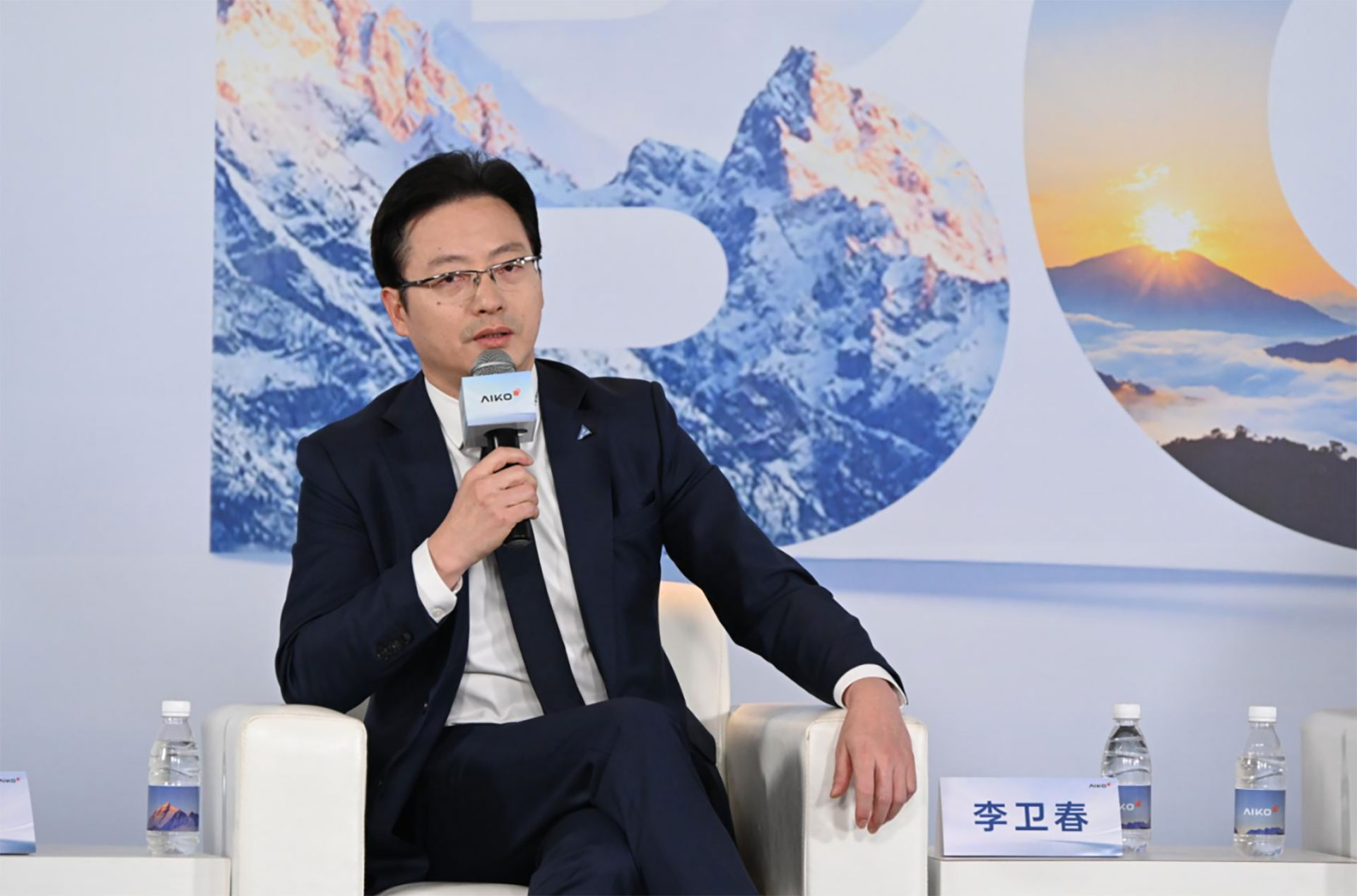
Li Weichun, Vice President of TÜV Rheinland Global Power Electronics Service, stated that the participation of testing institutions in the roundtable itself reflects BC’s entry into a new phase emphasizing verification and application, strongly supporting Aiko’s future development. In fact, TÜV Rheinland’s labs began BC product testing in 2021. After 3–4 years of data tracking, Li Weichun witnessed BC’s dramatic performance improvement: "Our lab has measured BC cell conversion efficiency up to 27.55%, a more than 1.2% advantage over other technologies."
Market feedback on BC confirms that end consumers are willing to pay a premium for products that meet performance needs.
Securities research reports show Aiko’s ABC modules command about a 10% premium in China’s distributed market, 10–20% in overseas distributed industrial and commercial markets, and up to 30–40% in high-value European residential markets. High-power, all-black aesthetic double-glass ABC modules sell for over ¥1.2/W in European residential channels.
While BC products are slightly more expensive, they deliver higher power station returns. Fan Ruiwu shared a typical case: urban balcony space is precious—for example, in Shenzhen, 1 square meter of housing costs ¥100,000. BC modules generate ~10% more power than traditional products in the same area. Critically, they perfectly fit household tiered electricity pricing: ¥0.6/kWh for 200–400 kWh and ¥0.86/kWh above 400 kWh, maximizing revenue from every inch of rooftop space.
Additionally, Skyworth’s biggest challenge in residential and industrial-commercial development is customer acquisition, internally called "selecting good people and good houses". Most houses, especially rural ones, fail standards due to shading, which severely impacts PV power generation. BC modules’ shading tolerance played a key role, raising residential PV customer acquisition success from 30% to 60% and drastically cutting channel development costs.

Despite a higher price tag, BC modules cut channel costs by half, making total economics highly favorable. Fan Ruiwu said: "Advanced technology delivers great value both economically and in market expansion."
Notably, BC modules’ "safety redundancy" is a key advantage in industrial and commercial scenarios. In dust- and fiber-sensitive facilities like flour and textile mills, Aiko’s ABC modules eliminate traditional virtual welding risks via laser welding and feature anti-hot-spot design, providing full fire safety from module to system.
Test data from Li Weichun shows BC modules have hot-spot temperatures over 40℃ lower than comparable products, enhancing safety and reliability. The latest BC cells reach 27.55% efficiency, delivering significant power gains per installed area. As a BC leader, Aiko pioneered 25% ABC module mass production efficiency, giving it a natural edge in high-efficiency bids above 23.8%.
Scenario Revolution: The Wisdom and Courage of Chinese Manufacturing to Navigate Cycles!
Beyond driving industry-wide module efficiency gains, BC has sparked a PV "scenario revolution"
Many PV firms now emphasize scenario-based applications. At the roundtable, Chen Gang noted that BC technology pioneered scenario-based applications, leading the industry toward differentiated development.
BC modules stand out in today’s efficiency-driven market by precisely adapting to residential, industrial-commercial, utility-scale, and other scenarios, translating "module efficiency" into tangible user value and solving core pain points. BC is not just a rooftop product but a series for diverse applications.
According to Wang Yongqian, Aiko’s Chief Scientist:
· For utility-scale scenarios: BC offers large-format, high-power products with bifaciality >80%.
· For mountain scenarios: BC provides specially designed modules with strong power generation under low light, varying orientations, and tilts.
· For offshore and aquatic scenarios: BC offers impact-resistant modules with excellent high-humidity and salt tolerance—unique to BC, using copper-plated metallization for superior mechanical, acid/alkali, salt, and humidity resistance.
The industry is closely watching BC’s accelerating breakthrough in the utility-scale market.
Since August 2024, when Huaneng Group reserved a 1 GW BC section in its 15 GW framework bidding, major power groups including Huadian, SPIC, Datang, South-to-North Water Diversion, Yuehydropower, and Inner Mongolia Energy have all set separate BC module sections, signaling growing recognition of BC’s differentiated value in utility-scale applications.
From early 2025 to present, Aiko has won multiple domestic utility-scale projects. At Intersolar Munich, Aiko secured high-profile projects including Europe’s largest 340 MW BC ground power plant and Africa’s largest 225 MW BC ground plant. In Europe, Aiko expects a sharp rise in 2026 ABC module shipments partly driven by utility-scale growth.
Aiko’s utility-scale BC products reach 665 W with 80% bifaciality, outperforming top-tier TOPCon products (650 W, 85% bifaciality). With new high-bifaciality launches, panelists agreed ABC utility-scale orders will surge in 2026.
Wang Yongqian predicted BC’s utility-scale market share will grow ~10% annually in coming years: "This is a critical step determining whether BC can stabilize, go far, and become the most mainstream PV technology amid fierce competition."
Leave A Message
Home
products
contact