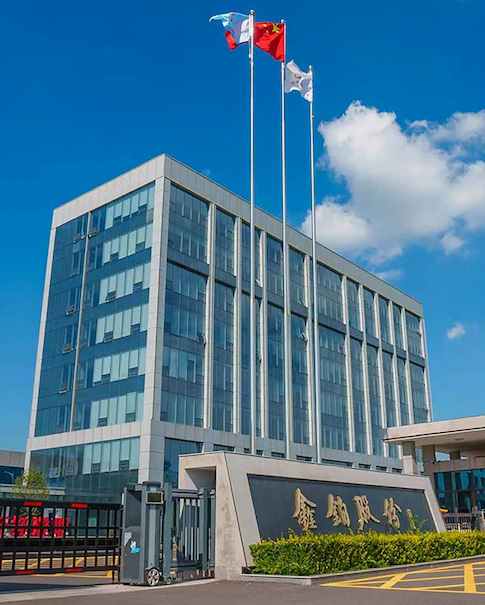

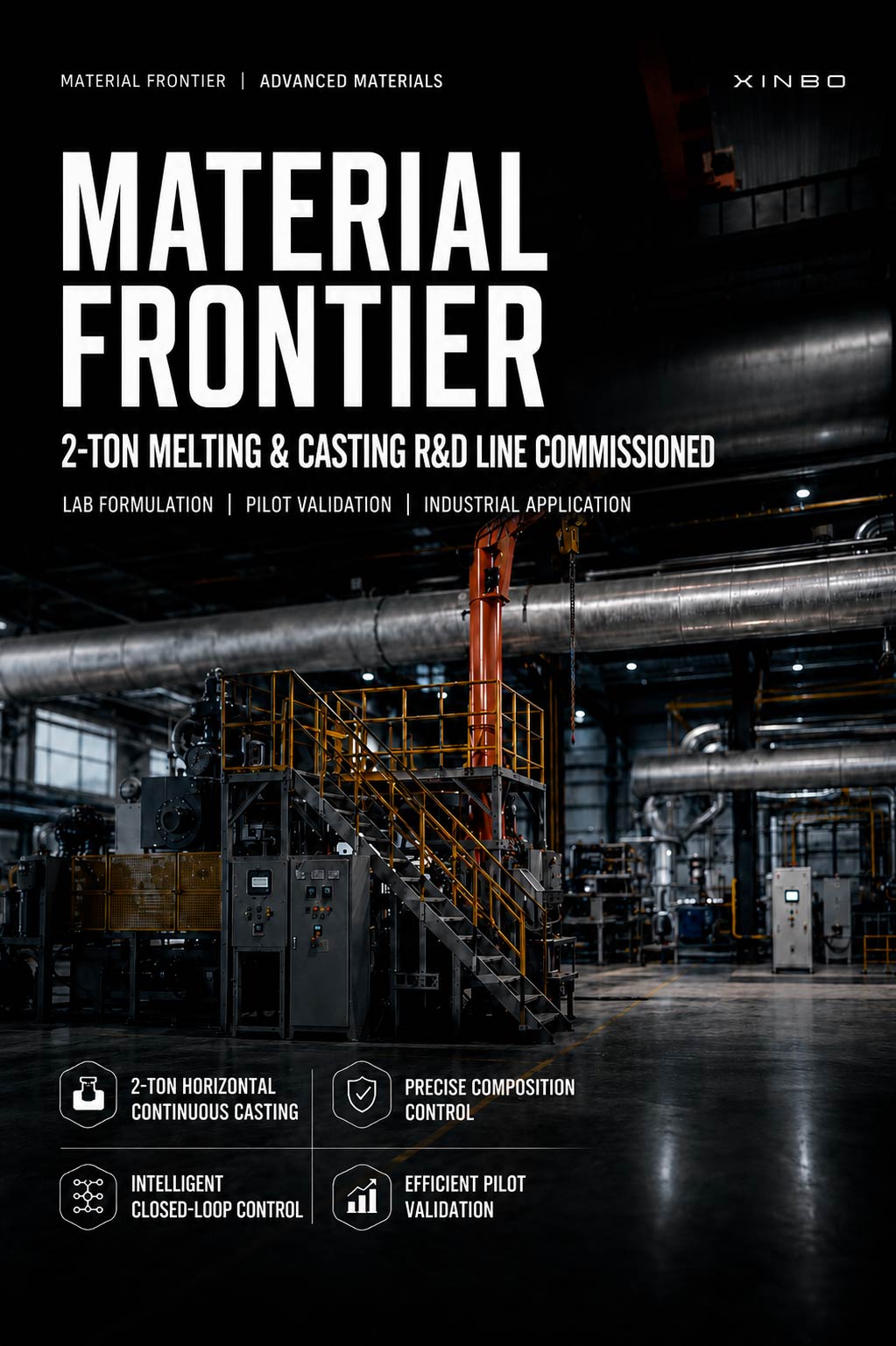
Recently, the 2-metric-ton-scale horizontal continuous casting pilot R&D line at Xinbo Alloy Materials Research Institute successfully completed installation, commissioning, and trial production validation, marking its official transition into operational service.
In advanced aluminum alloy research and development, laboratory formulations are just the starting point. Before a new material can be incorporated into a product portfolio, it must pass through several critical stages, including sample production, pilot-scale validation, manufacturing process optimization, and subsequent manufacturing processes.
For many materials development projects, the challenge lies not only in whether a material can be successfully produced, but also in whether it can be produced consistently, scaled up efficiently, and maintain stable performance in actual production environments.
This is precisely where the value of a pilot-scale testing platforms lies.
Multi-grade aluminum alloy capability supporting customized and differentiated R&D
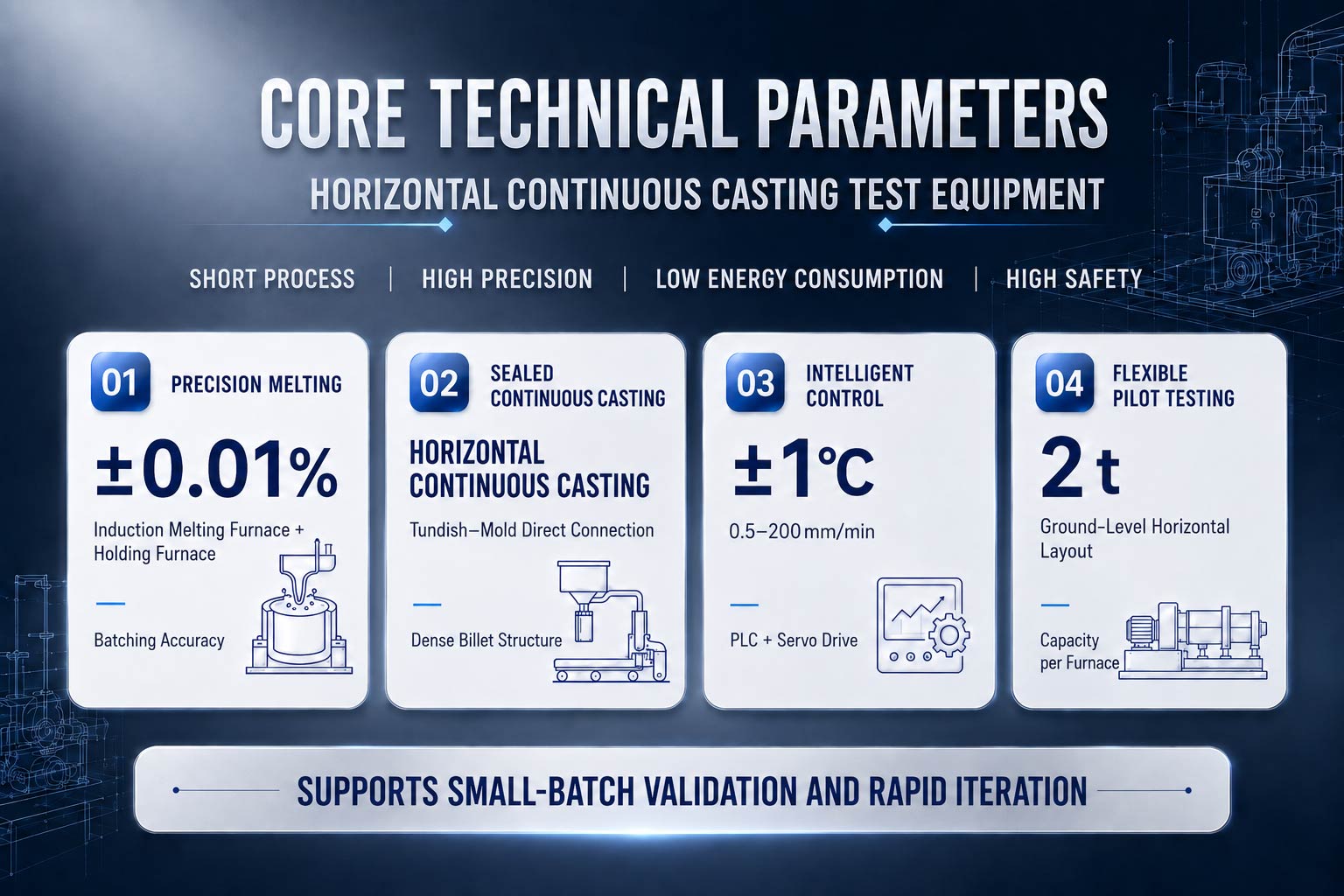
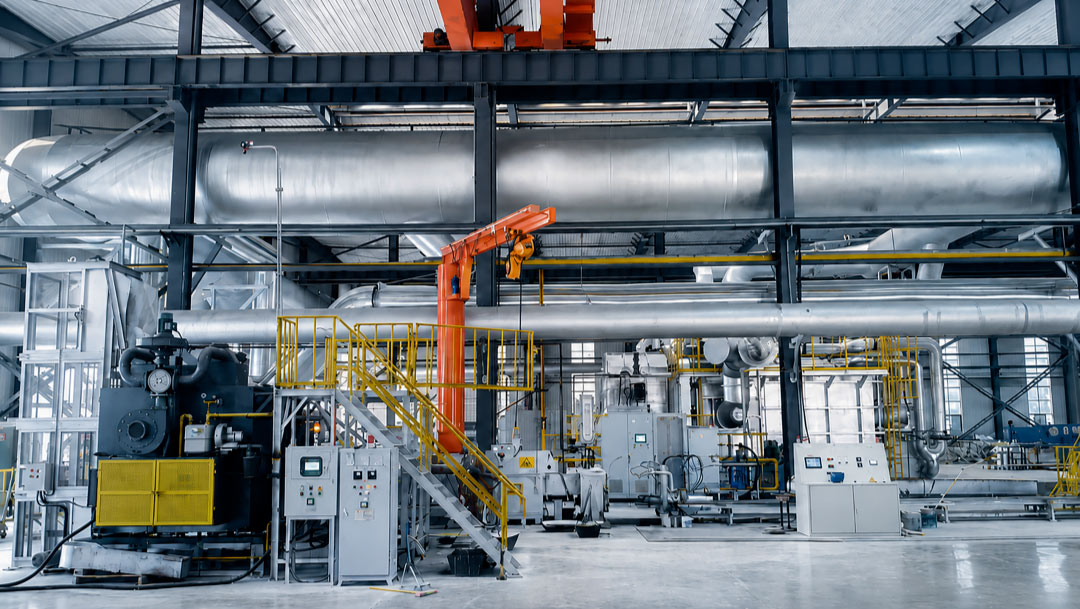
The newly operational 2-metric-ton-scale horizontal continuous casting pilot R&D line is primarily designed to address the development needs of aluminum alloy materials for emerging industries such as new energy vehicles, photovoltaic technologies, high-end equipment, and industrial robots. And this line is capable of supporting small-scale trials, multi-grade alloy development, differentiated composition validation, and rapid process iteration, providing a flexible platform for accelerating advanced material innovation.
Precise composition control lays the foundation for material performance
The production line is equipped with a 2-metric-ton-scale induction melting furnace and holding furnace system, enabling flexible switching among different aluminum alloy systems, including aluminum-based, Al-Mg, and Al-Cu alloys. The system achieves alloying accuracy of up to ±0.01%, providing precise control over material composition. For customized alloy development, the higher the precision of composition control, the stronger the foundation for subsequent performance verification and optimization.
A denser microstructure of the casting blank enhances material stability at the source
During the casting process, the production line features a sealed tundish directly connected to the crystallizer, combined with a high-purity graphite lining and multi-stage gradient cooling crystallization. These technologies help stabilize melt flow and solidification processes, improving the cast billet microstructure and enhancing its density and surface quality.
For materials R&D, this step addresses the critical foundation: ensuring precise composition control, stable cast billet quality, and reliable samples for subsequent performance validation.
Small-scale trials define the direction, while pilot-scale validation verifies stability
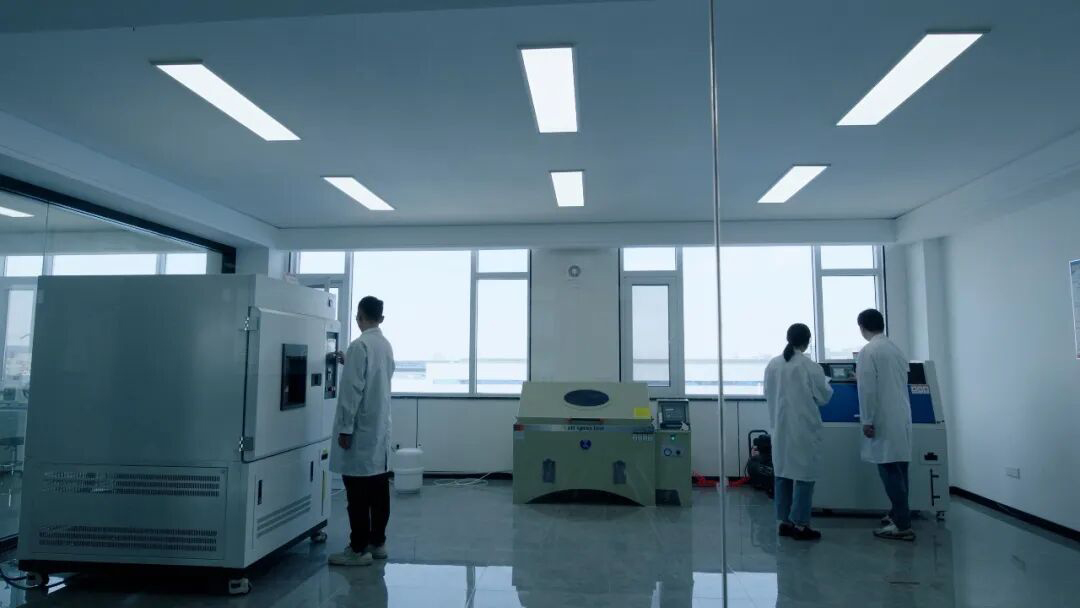
Laboratory samples can help determine the direction of material development, but the true measure of a material’s application potential lies in its stability after process scale-up. Bridging the gap between laboratory research and mass production, the 2-metric-ton-scale horizontal continuous casting pilot R&D line enables small-scale trials and intermediate-scale production testing, delivering practical data support for material optimization and final validation.
Intelligent closed-loop control enabling process data optimization
The production line is equipped with an industrial intelligent PLC-based closed-loop servo control system, enabling melting temperature control accuracy within ±1°C and allowing casting speed to be precisely adjusted to any value within the range of 0.5–200 mm/min. Key process data generated during production can be automatically recorded and retained, supporting subsequent alloy formulation optimization, parameter analysis, and process iteration.
Moving from result-based evaluation to rule-based optimization
This means materials development is no longer simply a process of “testing once and checking the outcome.” Instead, it can build a more systematic data loop by exploring the relationships between composition, temperature, casting speed, structure, and material properties.
Quality assurance moved upstream to reduce downstream processing risks
The value of aluminum alloy materials is ultimately reflected in their end applications. If the cast billet microstructure is unstable or gas content is not properly controlled, subsequent processes such as extrusion, processing, and testing may be affected. Therefore, pilot-scale validation is not only about verifying whether the alloy formulation is feasible, but also about ensuring whether the material can meet the requirements of subsequent processing technologies.
Melt purification enhances casting blank reliability
Relying on melt purification and stable continuous casting processes, the production line can achieve a minimum hydrogen content of 0.12 ml/100 g in aluminum alloy materials. This helps reduce the risk of defects such as porosity and shrinkage, providing a solid foundation for subsequent extrusion, precision processing, and consistency in end products.
Horizontal continuous casting balancing safety and green production
Meanwhile, the horizontal continuous casting process eliminates the need for deep-well infrastructure, reducing safety risks associated with traditional deep-well casting at the source. Equipped with a closed-loop fume treatment system, the R&D and trial production process also better meets the requirements of green manufacturing.
Pilot-scale test bridging laboratory research and industrial production
Pilot test is not the end of R&D, but a critical link connecting laboratory research with industrial production. Leveraging the 2-metric-ton-scale horizontal continuous casting pilot R&D line, Xinbo Alloy Materials Research Institute will further advance the development and process validation of high-performance aluminum alloy materials for applications including new energy vehicle structural components, photovoltaic profiles, and high-end equipment.
Integrating manufacturing capabilities to accelerate the transition of R&D achievements into applications
Meanwhile, the platform can be integrated with Xinbo’s existing manufacturing capabilities, including profile extrusion and precision deep processing, enabling synergy across material development, sample validation, process adaptation, and subsequent manufacturing.
Advancing from material validation to product applications
This allows materials development to go beyond laboratory research and move more rapidly into product validation, process integration, and industrial-scale application.

Currently, the Research Institute leverages this platform to collaborate with several leading universities in China, including Central South University and Hefei University of Technology, conducting R&D projects in areas such as new energy vehicles, robotics, and low-altitude aviation.
Looking ahead, Xinbo’s Research Institute will further utilize this platform to provide customized aluminum alloy material development, new product prototype trials, multi-grade alloy formulation validation, process optimization, and material properties testing services for industrial partners across the Yangtze River Delta region. By doing so, it aims to accelerate the transition of more material solutions from laboratories to production lines, and from sample to application
Meanwhile, relying on this platform, Xinbo’s Research Institute will also provide industry chain partners with a range of services, including customized R&D of aluminum alloy materials, trial production of new product samples, multi-grade formulation verification, process optimization, and material performance testing. If your company has any needs in the development of new aluminum alloy materials, pilot-scale amplification, or application validation, you are welcome to connect and engage with Xinbo Alloy Materials Research Institute.
Leave A Message
Home
products
contact